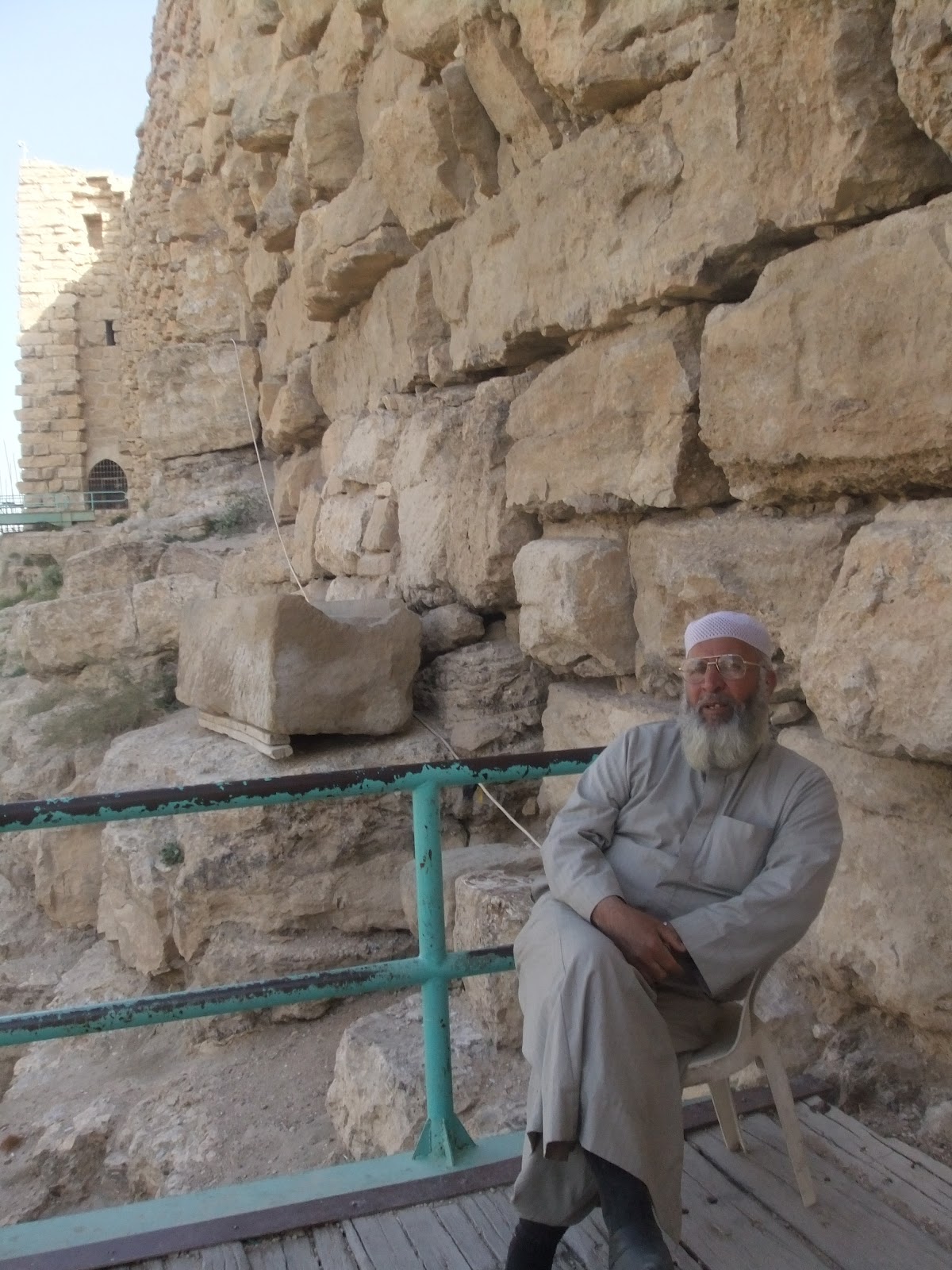
Esse e um "complexo"de ruinas de igrejas. O mosaico bizantino encontrado na Igreja de Sao Estevao e muito impressionante, nao so pela sua beleza, mas pela historia contada pelo "cuidador"do lugar.
Ele diz que sua familia usava o predio para cozinhar, um dia, uma das mulheres viu um azuleijo embaixo da brasa e limpou o lugar, descobrindo o incrivel mosaico.
This is a "complex" of churches ruins. The Byzantine mosaic found in the Church of St Stephen is very impressive, not only for its beauty, but the story told by the "caretaker" of the place.He says his family used the building for cooking, one day, one of the women saw a tile under the fire and cleared the place, discovering the incredible mosaic.

Ainda da pra ver a marca do fogo, embora eu nao tenha encontrado nenhuma referencia historica que comprove essa versao.
One can still see the mark of the fire, although I have not found any historical references to prove his version
No site Destinos Sagrados, encontrei esse texto sobre o mosaico ( e as fotos deles estao muito melhores que as minhas)
Mosaicos da Igreja de Santo Estêvão
A célebre igreja de Santo Estêvão (785 dC) tem um piso de mosaico magnífico em todo o interior. A inscrição identifica Umm ar-Rasas como a antiga cidade de Kastron Mefaa. Abaixo da inscrição eram encontrados os contornos de retratos de "patrocinadores", que foram removidos por iconoclastas. Ha tambem árvores frutíferas que continuam visiveis.O painel central do mosaico - com rodelas com motivos agrícolas e de caça - esta bastante danificado, mas sao as bordas que merecem maior atencao.Os desenhos em volta do mosaico são representações de 15 grandes cidades que apareceram no século 8, cada mosaico marcado em grego. Aqueles que estão no lado norte estão na Palestina; os da esquerda são na Jordânia.
Jerusalém tem um lugar de destaque ao lado do altar, rotulado como "Cidade Santa" (HAΓIA ΠΩΛIC). Próximo a ele é Kastron Mefaa, representada por um pilar e uma igreja. As cidades restantes sao na Jordania e são Filadélfia (Amã), Madaba, Esbounta (Hesban), Belemounta (Ma'in), Areopolis (Rabba) e Charachmoba (Karak). Sob Jerusalém estão as cidades palestinas de Nablus, Sebastis, Cesaréia, Dispolis (Lidda), Eleutheropolis (Beit Gibrin), Askalon e Gaza. No topo das naves laterais estão mais duas cidades jordanianas, Limbon e Diblaton,
In the Sacred Destinations website, I found this text on the mosaic (and their photos are much better than mine)
Mosaics of St. Stephen's Church
The celebrated Church of St. Stephen (785 AD) has a magnificent mosaic floor throughout the interior. The dedicatory inscription provided the date of the mosaic and, importantly, identified Umm ar-Rasas as the ancient city of Kastron Mefaa. Below the inscription are the outlines of donor portraits, which were removed by iconoclasts, and fruit trees.The central panel of the nave mosaic - featuring roundels with agricultural and hunting motifs - is badly damaged, but it is the border that gets the most attention anyway. Creating a wide rectangular frame around the nave are mosaic depictions of 15 major cities as they appeared in the 8th century, each labeled in Greek. Those on the north side are in Palestine; those on the left are in Jordan.
Jerusalem has pride of place next to the altar, labeled as "Holy City" (HAΓIA ΠΩΛIC). Next to it is Kastron Mefaa itself, represented by a pillar and a church. The remaining Jordanian cities are Philadelphia (Amman), Madaba, Esbounta (Hesban), Belemounta (Ma'in), Areopolis (Rabba) and Charachmoba (Karak). Beneath Jerusalem are the Palestinian cities of Nablus, Sebastis, Caesarea, Dispolis (Lidda), Eleutheropolis (Beit Gibrin), Askalon and Gaza. At the top of the side aisles are two more Jordanian towns, Limbon and Diblaton.